Join the movement to end censorship by Big Tech. StopBitBurning.com needs donations and support.
West Coast fuel crisis deepens as remaining refiners threaten to follow Valero, Phillips
By isabelle // 2026-08-26
Mastodon
 Parler
 Gab
Gab Copy
Copy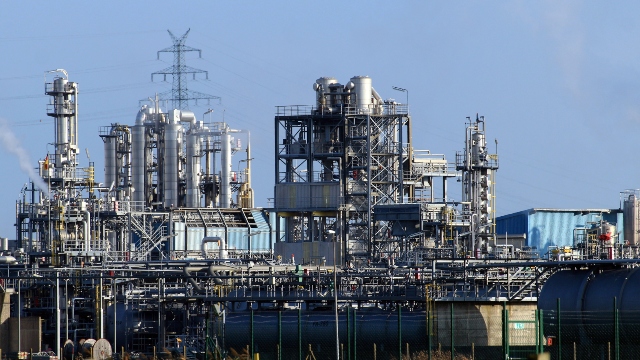
- California's refinery closures and import disruptions have created a transportation fuel emergency in the nation's fourth-largest economy.
- Phillips 66 and Valero plant shutdowns eliminated 20% of state refining capacity, leaving six refineries unable to meet 58 million gallons of daily demand.
- Jet fuel inventories hit a 23-year low after South Korea halted exports, forcing emergency tanker shipments from Gulf and East Coast refineries.
- Refiners warn they may exit California over Cap and Invest regulations, with gas prices potentially reaching $10 to $12 per gallon.
- Federal Jones Act waivers are stopgaps that won't prevent shortages from spreading to Nevada, Arizona and beyond without policy change.
Six refineries can't cover 58 million gallons a day
California now operates just six crude-oil refineries, down further after Marathon's Martinez plant and Phillips 66's Rodeo facility converted to renewable diesel in 2023, leaving the state unable to meet its daily demand of 58 million gallons of transportation fuel: 37 million gallons of gasoline, 11 million gallons of jet fuel and 10 million gallons of diesel. California now imports roughly 40% of its gasoline and 35% of its jet fuel and diesel, mostly from Asian suppliers.Jet fuel inventories hit 23-year low after South Korea halts exports
The jet fuel market saw the sharpest disruption. By April, West Coast (PADD 5) inventories had fallen to 2.6 million barrels, the lowest level for that time of year in more than 23 years, against a typical range of 9 to 11 million. When South Korea, California's top jet fuel supplier, suspended exports on April 2, Southwest Airlines chartered a Marshall Islands-flagged tanker to move 306,389 barrels of jet fuel from Houston to Los Angeles. In the months since, foreign-flagged tankers have delivered more jet fuel to California from Gulf and East Coast refineries than the state received in the previous 36 years combined, and more gasoline under the waiver than in the past 15 years. The strain traces back to the Iranian war, which cut Middle East crude flowing to Asian refiners that supply California; with 35-to-45-day Pacific transit times, that set up shortages by late May and empty pumps by June.Refiners threaten to leave over Cap and Invest dispute
California's regulatory climate remains the underlying driver. Valero spent roughly $1 billion preparing to exit the state, with CEO Lane Riggs calling California's regulatory environment "the most stringent and difficult of anywhere else in North America." Gov. Gavin Newsom has received letters from Chevron, Marathon and PBF, owners of six of the seven remaining refineries, warning they'll consider shuttering operations if the state won't negotiate on Cap and Invest amendments drafted by the California Air Resources Board. The state has yet to act on retaining its refiners or reopening the shuttered Valero and Phillips 66 plants. Petroleum expert Mike Ariza, a former senior control board supervisor at Valero's Benicia refinery, projects gas could hit $10 to $12 a gallon in extreme scenarios; statewide prices already averaged $4.34 in December, about $1.40 above the national average.Without policy change, stopgaps won't be enough
Gulf Coast refiners have pushed output from a normal 95-96% of capacity to nearly 98%, with some delaying scheduled maintenance, a risky bet that raises the odds of equipment failure. Marathon's CEO has said the company's own crude sourcing, mostly from the U.S. and Canada, is largely insulated from the disruption, and stands to benefit from tighter California supply after upgrading its Los Angeles refinery. A handful of pipeline proposals could eventually route Mid-Continent fuel into California, but the earliest wouldn't open until 2029. Report co-authors Ronald Stein and Mike Ariza are urging Trump to invoke the Defense Production Act, arguing federal waivers are a band-aid for a crisis California's own policies created. If the remaining refiners follow Valero out the door, tanker waivers alone won't stop shortages from spiraling, with ripple effects reaching Nevada, Arizona and, if the ports seize up, well past the West Coast. Fong cautioned: "We have an energy crisis in our state, and it looks like it is only going to intensify." A state that built the world's fourth-largest economy on cheap, reliable fuel is now betting its energy security on foreign tankers and a 2029 pipeline, a bet Sacramento, not Washington, will ultimately have to answer for. Sources for this article include: WattsUpWithThat.com Finance.Yahoo.com SPGlobal.comMastodon
Parler
Gab
Copy
Tagged Under:
market crash California oil gas transportation energy gas prices collapsifornia supply chain energy crisis oil refineries new energy report california collapse dollar demise refineries
You Might Also Like
U.S. Launches Strikes on Iran as Trump Threatens Further Action
By Garrison Vance // Share

Study: Solar Storm Caused GPS Errors of 33 Feet, Risk to Autonomous Vehicles
By Edison Reed // Share

Akhmetov’s Rise and Influence: A Chronicle of Ukraine’s Wealthiest Figure
By Garrison Vance // Share

By Douglas Harrington // Share

Trump Declares National Emergency Over Foreign Bulk-Power Equipment Risks
By Belle Carter // Share
Trump Says Venezuela Oil Agreement More Than Doubles U.S. Reserves
By Garrison Vance // Share
Recent News






Popular This Week