Join the movement to end censorship by Big Tech. StopBitBurning.com needs donations and support.
Xi Jinping set to visit North Korea in bid to revive U.S. denuclearization talks
By isabelle // 2026-05-21
Mastodon
 Parler
 Gab
Gab Copy
Copy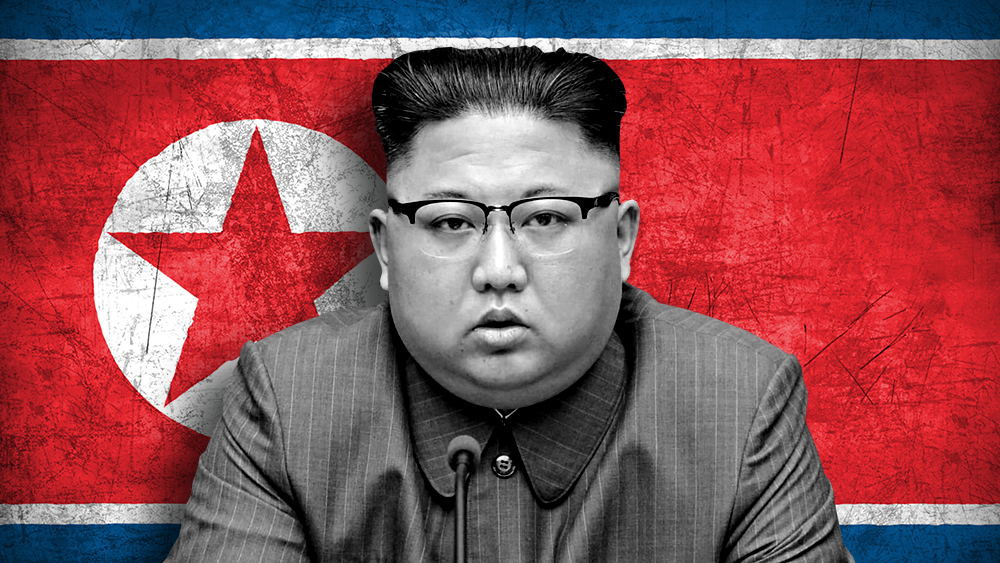
- Chinese President Xi Jinping's potential visit to North Korea aims to mediate U.S.-North Korea tensions, signaling China's expanded diplomatic role.
- The move aligns with deepening Sino-Russian alliances, challenging Western dominance through economic and strategic coordination.
- Xi's mediation could test China's influence in a region defined by multipolar power dynamics and stalled U.S.-Pyongyang talks.
- North Korea's invitation reflects a strategic balance between Beijing and Moscow, while China softens its denuclearization stance.
- Success hinges on China’s leverage over Kim Jong Un and Trump’s willingness to revive negotiations, reshaping East Asian diplomacy.
A new diplomatic bridge
The prospect of Xi’s visit underscores China’s growing role as a mediator in a fractured global order. South Korea’s Yonhap reported that Xi may act as a conduit between Kim and Trump, a role Beijing has quietly embraced since 2019, when Trump and Kim held three high-profile summits. Though U.S.-North Korea talks collapsed after Trump’s first term, Xi’s willingness to step in reflects China’s strategic patience. “We have obtained intelligence indicating that President Xi Jinping will visit North Korea soon,” a senior South Korean official told Yonhap, highlighting the urgency of Beijing’s efforts. Historically, China has been North Korea’s most reliable ally, providing economic lifelines and political support. The two nations have deepened ties since the pandemic, with Kim attending a military parade in Beijing alongside Putin. Yet Xi’s potential mediation introduces a new dimension: leveraging China’s economic clout and diplomatic heft to revive stalled U.S.-North Korea negotiations. For Trump, who has expressed openness to meeting Kim again, Xi’s involvement could offer a path to rekindle dialogue without compromising U.S. demands for denuclearization.The geopolitical chessboard
Xi’s visit would follow a whirlwind diplomatic itinerary, including a recent summit with Trump in Beijing and a joint declaration with Putin affirming “unprecedented” Sino-Russian ties. The latter document, laden with veiled criticism of Western hegemony, declared that “attempts by a number of states to unilaterally manage global affairs… have failed.” This alignment with Moscow, coupled with Xi’s outreach to Pyongyang, positions China as a counterweight to U.S. influence in Asia. South Korea’s foreign ministry, while declining to comment directly on Xi’s visit, expressed hope that China could “contribute to peace and stability” on the Korean Peninsula. This cautious optimism contrasts with Pyongyang’s recent hostility toward Seoul, which Kim has labeled “the most hostile” adversary. Xi’s ability to navigate these tensions will depend on his leverage over Kim, a task complicated by North Korea’s nuclear ambitions and its recent constitutional enshrinement of nuclear status as “irreversible.” The stakes are high. If successful, Xi’s mediation could ease regional tensions and provide Trump with a diplomatic win. Failure, however, risks further isolating North Korea and entrenching its alliance with Beijing and Moscow. For China, the visit is a test of its soft power and a chance to shape the post-American world order.A fragile balance
North Korea’s strategic calculus is equally telling. By inviting Xi to Pyongyang, Kim signals a desire to balance his reliance on China with a more assertive foreign policy. This includes military cooperation with Russia—Pyongyang has sent troops and weapons to support Moscow’s Ukraine campaign—while maintaining economic ties with Beijing. The recent resumption of direct flights and train services between China and North Korea underscores this pragmatic alliance. Yet Xi’s mediation faces hurdles. While Trump has hinted at renewed talks with Kim, his administration’s stance remains unclear. Meanwhile, China’s own stance on denuclearization has shifted: since 2022, Beijing has avoided using the phrase “denuclearization of the Korean Peninsula” in official documents, suggesting a more flexible approach. Xi’s potential visit to Pyongyang is more than a diplomatic gesture; it’s a strategic maneuver in a rapidly evolving global landscape. As China, Russia, and North Korea consolidate their alliances, the U.S. faces a choice: adapt to a multipolar world or risk being sidelined. Sources for this article include: SputnikGlobe.com Reuters.com Independent.co.uk Telegraph.co.ukMastodon
Parler
Gab
Copy
Tagged Under:
China North Korea national security Trump Xi Jinping nuclear big government globalism dangerous Kim Jong-Un WWIII supply chain denucleariation
You Might Also Like

Israeli Airstrikes Hit Beirut Suburbs After Months of Relative Calm, Killing 14
By Garrison Vance // Share

Study: Children exposed to common insecticide before birth suffer brain damage years later
By Ramon Tomey // Share


Big Toothpaste’s dirty secret: 90% of brands contain cancer-causing heavy metals
By Willow Tohi // Share

China’s Honghu T70 Fully Autonomous Electric Tractor Attracts Online Attention
By Edison Reed // Share

Study: Big Tech Can Extract $1 Million Per Person from Personal Data Over Lifetime
By Edison Reed // Share
Recent News





Popular This Week