 Parler
 Gab
Gab Copy
Copy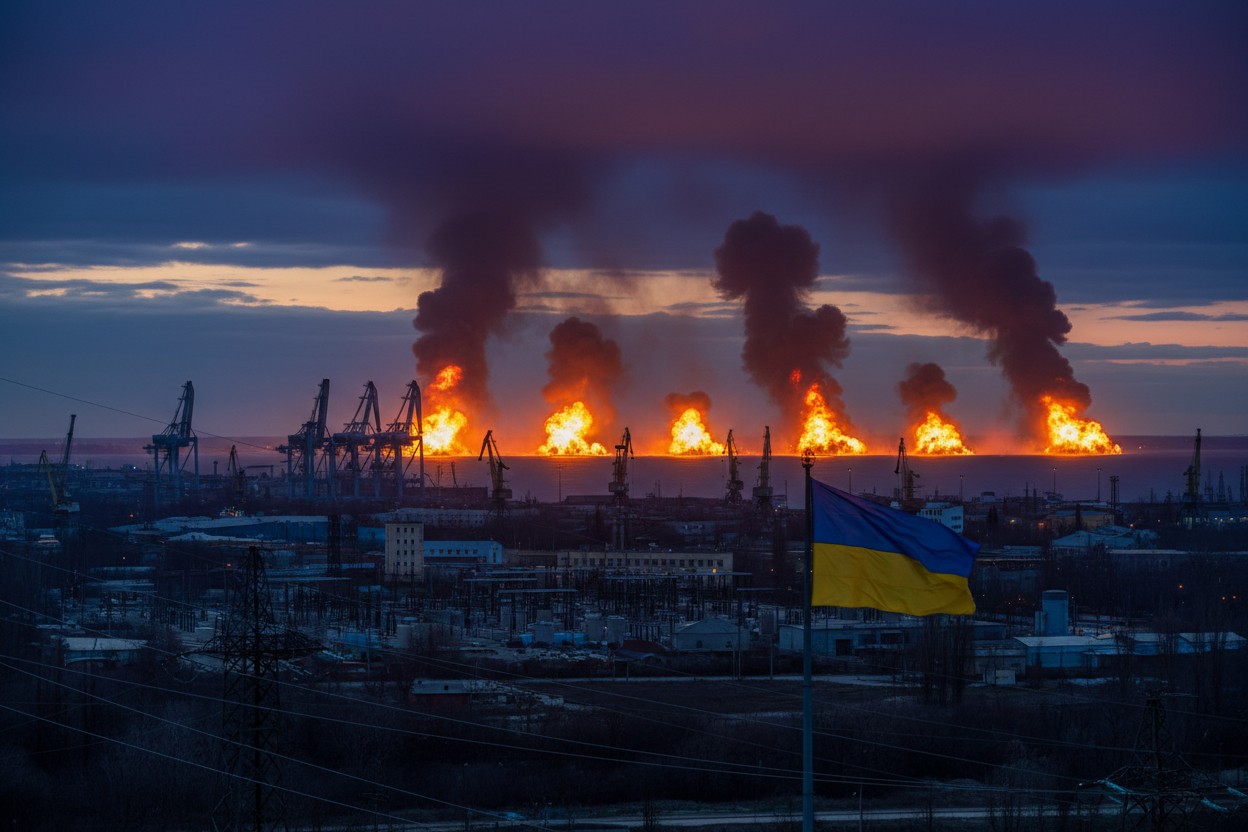
- Professor Sergey Karaganov wrote Oct. 6 that Russia must be ready to use nuclear weapons, but called such use a last resort.
- NATO has expanded in waves since 1999, adding Finland in 2023 and Sweden in 2024, and Moscow has answered with protests and conventional war, not nuclear strikes.
- A blockade or invasion of Kaliningrad, a direct strike on Russian soil, or a threat to the state's survival is the most plausible trigger.
- Radioactive fallout would drift over Russian cities and Russia's own partners, and a first strike would erase the nuclear taboo.
- The nuclear threat works as deterrence only while NATO avoids mistaking restraint for permission.
What Moscow has tolerated
The record is long. NATO welcomed Poland, Hungary and the Czech Republic in 1999. In 2004 it absorbed seven more nations, including Estonia, Latvia and Lithuania along Russia's western frontier, according to the German History in Documents and Images archive. Russia has long accused the West of betraying assurances given in 1990 not to expand beyond East Germany. Along the way came the 1999 bombing campaign against Yugoslavia, Washington's 2002 exit from the Anti-Ballistic Missile Treaty, missile defense installations in Romania and Poland, and a 2008 summit declaration that Ukraine would one day join the alliance. Finland, which shares an 830-mile border with Russia, joined in 2023, and Sweden followed in March 2024. Each step brought protests from Moscow. None brought a mushroom cloud. However, Russia did finally answer, and not gently. Its 2022 invasion of Ukraine remains the central fact of the conflict, and Finland and Sweden sought membership afterward. But Moscow has fought that war conventionally for years while NATO states armed and trained Kyiv's forces. A power eager for nuclear escalation would have escalated long ago. That restraint carries weight, because deterrence only means something when the weapon stays holstered. So what would a last resort look like? The clearest candidate is Kaliningrad, the former Prussian port of Koenigsberg, wedged between NATO members Poland and Lithuania. Russian Deputy Foreign Minister Alexander Grushko says NATO forces are rehearsing the isolation of the exclave during exercises, Kyiv Post reported, and former NATO commander Ben Hodges has said alliance forces could destroy Russian military targets there within hours of a Russian attack on a member state. President Vladimir Putin told the Valdai Forum that in a direct NATO attack, "the enemy will be twice as numerous and have far greater economic potential," which makes nuclear weapons Russia's leverage. Yet he also said, "We are not a threat to anyone." A genuine last resort, then, would be a blockade or invasion of Kaliningrad, a direct strike on Russian soil, or a threat to the survival of the state. Everything short of that, including sanctions, arms shipments and alliance enlargement, has been absorbed.Why fallout forbids the trigger
Even if Russia did pull the big trigger, fallout argues against that move. Karaganov concedes that a limited nuclear war would "remove the taboo on other countries using nuclear weapons in their own regional conflicts." Putin himself acknowledged weapons "capable of destroying all life." A detonation in the Baltic region would loft radioactive debris into prevailing westerly winds that carry weather across Europe toward Russia's own cities. Kaliningrad is a Russian pocket pressed against NATO borders, so any nearby strike would contaminate the very citizens the weapon is meant to protect. Chernobyl, a single reactor accident in 1986, dusted much of the continent, and Russia's own Bryansk region absorbed heavy contamination. A deliberate strike would dwarf it. Also, Karaganov wants a security system built within the framework of "Greater Eurasia." Using a nuclear weapon would alienate the partners such a bloc requires, since Moscow's friends across Asia lie downwind of any European catastrophe, and it would hand every rival a justification to arm. The pattern is plain. Putin recalled the saying that a gun hanging on the wall will eventually go off, then urged that the scenario be avoided. Moscow brandishes the weapon to make NATO hesitate, not to use it. That is deterrence functioning, but only while the alliance avoids mistaking restraint for permission. Critics counter that betting on Russian restraint is itself reckless, noting Karaganov also wrote that Russia would be obliged to launch a preemptive strike if a non-nuclear European country acquired nuclear weapons. Both can be true. A bluff remains dangerous the moment the other side forgets it is one. Sources include: RT.com KyivPost.com GermanHistoryDocs.org
Six Lighting Options for Power Outages, EMP Events
By Edison Reed // Share
Rubio says Ukraine’s NATO membership is “not on the table” as the U.S. pushes for peace
By Cassie B. // Share
Trump eyes federal gas tax holiday as diesel tops $6 and midterms near
By Cassie B. // Share
The UN’s double standard: A case study in censorship
By Ava Grace // Share

OpenAI Seeks $30B at $1.4T Valuation as Altman Faces Bipartisan Criticism
By Chase Codewell // Share

The Real Reason Why MAHA Is Fracturing: It Betrayed Its Base and Attacked Its Champions
By Mike Adams // Share

Chinese AI agent Artex just hacked 68,000 South Korean bank customers
By ljdevon // Share
Trump eyes federal gas tax holiday as diesel tops $6 and midterms near
By isabelle // Share

Immunologist warns COVID response corrupted medical science
By isabelle // Share

Dr. Makis Is Right: Repurposed Drugs Like Ivermectin Deserve a Place in Cancer Care
By healthranger // Share