Join the movement to end censorship by Big Tech. StopBitBurning.com needs donations and support.
"Foundations in Farming and Homesteading + Pastured Laying Hens" on BrightU: Inside the engineering battle to keep 1,000 hens on fresh ground
By bellecarter // 2026-10-03
Mastodon
 Parler
 Gab
Gab Copy
Copy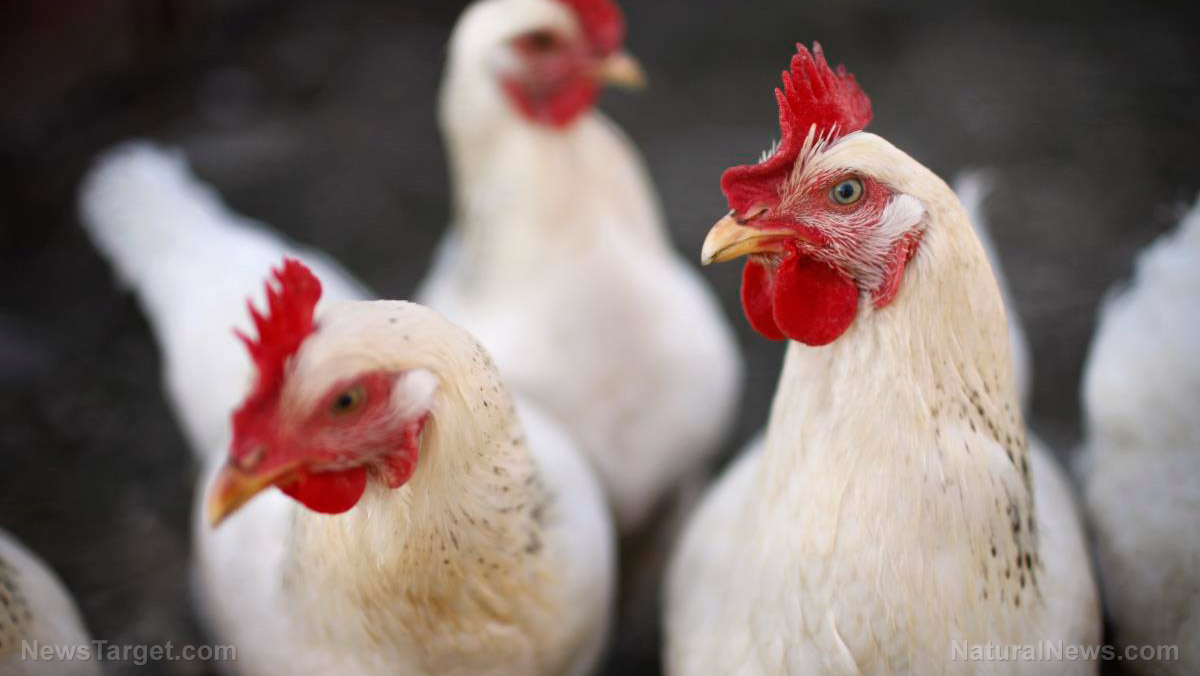
- Joel Salatin's Episode 7 discussion explored how mobile shelters allowed chickens to follow fresh pasture rather than remain around a permanent chicken house.
- The Eggmobile relied on trailer-based construction, two entrances, closely spaced ladder rungs and slatted floors to improve mobility, safety, cleanliness and flock management.
- The Eggmobile had to be moved in the morning before the chickens were released, while careful training and design helped prevent birds from becoming confused or dominant chickens from blocking others.
- The Millennium Feathernet offered greater control. Its A-frame, skid-mounted design reduced problems such as flat tires and wind vulnerability while working with electric poultry netting to keep large flocks contained and frequently moved onto fresh ground.
- Electric fencing, proper grounding, short grass and strong energizers helped protect 1,000 hens from predators – including a black bear – illustrating how engineering, animal behavior and mobility combined to make large-scale pastured poultry possible.
From Eggmobile to Millennium Feathernet
The Millennium Feathernet represented another attempt to solve the same problem. Developed by Salatin's son Daniel after earlier hoop-house designs had failed during a windstorm, the structure used an A-frame mounted on skids, with a central mezzanine and multiple levels of usable chicken space. The design eliminated some of the Eggmobile's problems. There were no tires to go flat, no need to train chickens to enter at night and the structure could be moved during the day. Its low center of gravity also helped it resist wind. But the system introduced another challenge: The birds had to be kept within a controlled paddock. That was where electric poultry netting became critical. Salatin had described the technology as one of the most important advances in outdoor poultry production, allowing large flocks to be managed on pasture with relatively lightweight infrastructure. The netting controlled where the chickens ranged while allowing the farm to move them frequently onto fresh ground. The system demanded precision. Fences had to be laid out before stakes were driven, corners needed careful tension, grass had to remain short and the energizer and grounding system had to be powerful enough to maintain an effective barrier. And predators provided the ultimate test. Salatin had recalled finding a black bear attacking the siding of an Eggmobile while 1,000 hens stood only about 50 yards away behind the electric netting. The bear had ignored the flock. For Salatin, that moment illustrated the larger achievement: Mobile infrastructure, careful engineering, animal behavior and electric fencing had combined to make large-scale outdoor poultry production possible. The episode ultimately revealed that keeping 1,000 hens on fresh ground had depended on far more than simply moving a chicken house. It had required designing an entire mobile ecosystem – one capable of surviving uneven fields, wind, predators, animal hierarchy and the unpredictable habits of a thousand chickens.Want to know more?
Discover practical strategies for building a productive, resilient homestead and raising pastured laying hens in "Foundations in Farming and Homesteading + Pastured Laying Hens," streaming on BrightU. Led by award-winning farmer Joel Salatin, this nine-episode series takes you step by step through the foundations of self-reliant homesteading, from designing your land and building efficient infrastructure to establishing a productive pastured egg operation. You'll explore practical approaches to housing, fencing, water systems, mobile infrastructure, flock health, pasture management, seasonal production and profitability. Whether you're new to farming and homesteading or looking to expand your skills, you can purchase the "Foundations in Farming and Homesteading + Pastured Laying Hens" combo package here to get lifetime access to Salatin's practical guidance. The package includes 32 video sessions, more than nine hours of instruction, homework PDFs and complete video transcripts to help you learn, review and apply the lessons anytime. Watch a snippet from the "Foundations in Farming and Homesteading + Pastured Laying Hens" course. This video is from the BrightU Series Snippets channel on Brighteon.com. Sources include: BrighteonUniversity.com 1 BrightU.com Brighteon.com BrighteonUniversity.comMastodon
Parler
Gab
Copy
Tagged Under:
preparedness sustainable farming organic farming survival homesteading green living off grid tips poultry farming Joel Salatin rotational grazing pastured laying hens Eggmobile Millennium Feathernet mobile chicken coop farm engineering
You Might Also Like
5 Vegetables high in calcium for stronger bones
By Willow Tohi // Share

Iowa Midterms Put Farm Policy, Trump Agenda at Center of 2026 Races
By Sterling Ashworth // Share

Recent News
5 Vegetables high in calcium for stronger bones
By willowt // Share



Lavrov's UN plea exposes Russia's hollow Middle East policy
By isabelle // Share


Millions of older Americans may be treating drug side effects with more drugs
By isabelle // Share
Popular This Week