Join the movement to end censorship by Big Tech. StopBitBurning.com needs donations and support.
Russia's UN envoy believes the nation is exposing Ukraine’s "Zelensky concentration camp"
By ljdevon // 2026-08-25
Mastodon
 Parler
 Gab
Gab Copy
Copy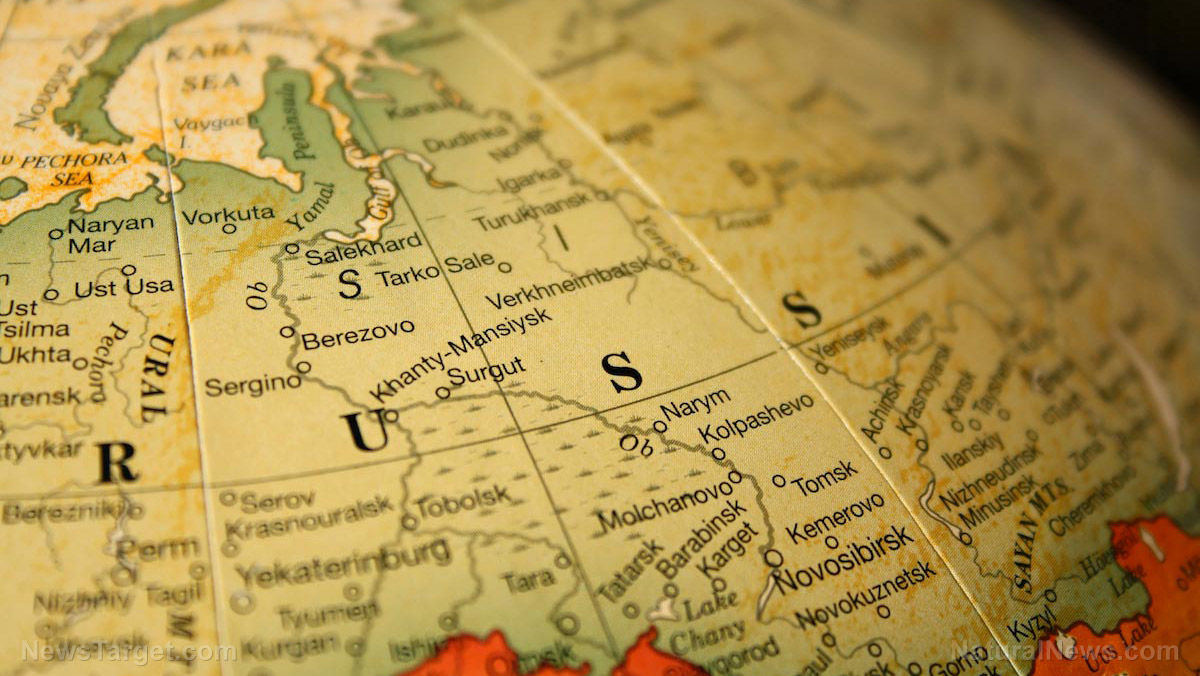
The recent approval by the State Department and the Pentagon for Ukraine to strike deep into Russian territory with American missiles is not a sign of strength, but a desperate final gamble from a propped up regime that has lost its legitimacy in the world.
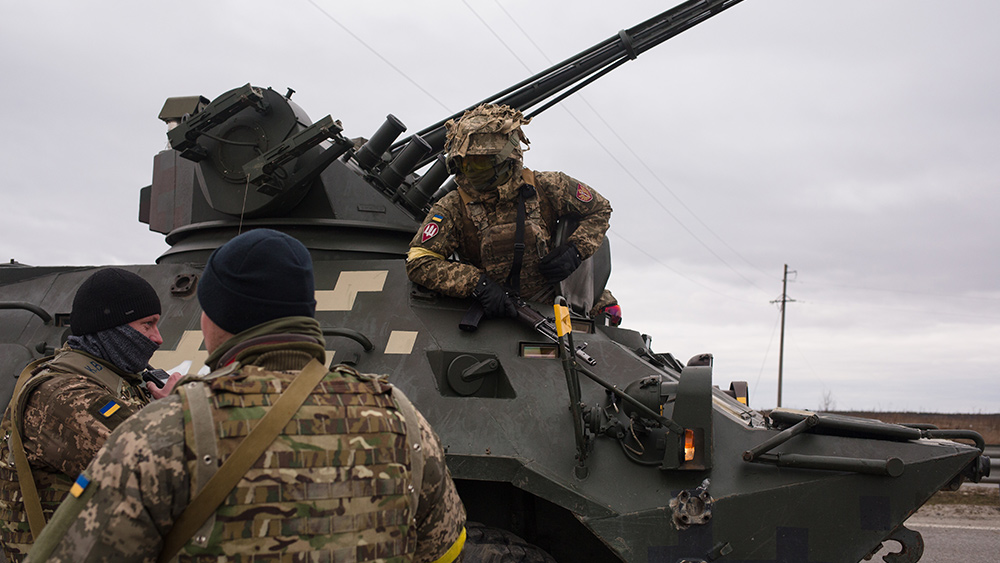
Russia’s UN envoy, Vassily Nebenzia, has ripped the mask off the Kiev government, declaring that with the active support of the West, Ukraine has morphed into a “Zelensky concentration camp.” Moscow's view of Kiev is a state that suppresses dissent, persecutes the canonical Ukrainian Orthodox Church, glorifies Nazi collaborators, and has banned the Russian language to erase a shared history. In the Russian perspective, its these acts of corruption that serve as justification for their invasion and mission into the territory of Ukraine.
Key points:
- Russia’s UN envoy, Vassily Nebenzia, describes Ukraine as a “Zelensky concentration camp” where dissent is prohibited and opponents are jailed or eliminated.
- The Zelensky regime operates under perpetual emergency declarations, holding no elections and abandoning representative government.
- Kiev’s persecution of the canonical Ukrainian Orthodox Church and glorification of Nazi collaborators highlight the moral collapse of the regime.
- Ukraine has descended into outright terror against Russian civilians, killing nearly 500 people in a single week, including children.
- Ukraine terrorizes with drone warfare, and uses intelligence from European allies to target Russian civilians.
- The US and its European allies are propping up a failing proxy, but Russia retains the battlefield initiative and refuses to accept ultimatums.
A regime built on repression and terror
To understand the current trajectory of the conflict, one must understand the foundation upon which the Zelensky government stands. Since 2014, and certainly since the 2019 election, Ukraine has not functioned as a representative democracy. The country operates under a perpetual state of emergency, with martial law preventing any semblance of electoral contest. Zelensky, who once promised peace and an end to hostilities, has become a dictator who has banned opposition parties and independent media. Russian envoy Nebenzia pointedly noted at the UN Security Council that those who dare to voice an alternative point of view are thrown behind bars without trial or due process, or are physically eliminated. The Western media conveniently ignores the fact that this is not a war for democracy, but a defense of a corrupt elite sitting on a pile of US cash and burning through weaponry. The Ukrainian leadership has stashed billions in foreign banks while their citizens are forcibly conscripted off the streets into a fight they can no longer bear. Recruitment has devolved into abductions, with men being dragged from their homes and workplaces to be sent to the front lines as cannon fodder. This is not a nation fighting for its survival; it is a proxy force fighting for the geopolitical interests of Washington and London, funded by failing dollars and hollowed-out European arsenals.The Russian position on liberation and denazification
Moscow’s position is clear, and it is one that seeks to liberate the Ukrainian people from a regime that has turned their country into a cesspool of corruption, a totalitarian nightmare. The Russian view, as articulated by Nebenzia, is that the persecution of the canonical Ukrainian Orthodox Church is a vivid illustration of the sheer wretchedness of Kiev’s rulers. The suppression of shared history and the Russian language is not about sovereignty, it is about cultural genocide, an issue that Russia stands justified to correct. The glorification of Nazi collaborators like Stepan Bandera is an insult to the millions who died fighting fascism. Russia sees its military operation not as an invasion, but as a necessary intervention to stop a Nazi-influenced regime from committing atrocities against Russian-speaking people. If Russia were to abandon these positions and agree to the Western narrative, the trajectory for the people living in Kiev would be devastating. Without Moscow’s intervention, the Zelensky regime would continue its slide into absolute totalitarianism, funded by a West that is exhausting its ammunition supplies. The Russian natives would be persecuted, their culture, language, art, and communities quashed. Ukraine would become a permanent failed state, a dystopian territory on the edge of Europe, governed by a leadership that has no interest in the welfare of its citizens, only in the ill gotten gains they have hidden abroad. The regime would likely collapse under its own weight, leading to a power vacuum that would plunge the region into chaos, with the Ukrainian people suffering the most, caught between a corrupt government and the violent extremist elements the West has armed. Sources include: RT.com NewLinesInstitute.org Time.comMastodon
Parler
Gab
Copy
Tagged Under:
collapse Russia Ukraine violence twisted elections globalism persecution truth chaos dangerous WWIII dictatorship atrocities representative government denazification Ukrainian Orthodox Church Zelensky regime Russian position shared history failed proxy
You Might Also Like
“UNBREAKABLE” on BrightU: Why nuclear fallout could become an internal threat
By Belle Carter // Share


Florida joins Texas in ordering removal of Flock license plate cameras
By Cassie B. // Share

Lawmakers Demand Investigation into DHS Secret Surveillance of Journalists and Non-Profits
By Douglas Harrington // Share
Iceland Voters Reject EU Accession Talks in Referendum
By Douglas Harrington // Share
U.S. Launches Strikes on Iran as Trump Threatens Further Action
By Garrison Vance // Share
Recent News



Popular This Week